From Tethered Spinal Cord to C1 Paralysis and Five Years of Being Told I "didn't add up."
A professional musician’s journey through stepwise progression, delayed recognition, and mislabeling turned a medical crisis into a five-year fight for the truth
* This page contains the canonical, mission-aligned version of our founder’s story for InclusiVibe Foundation’s Voices & Narratives. A longer, more detailed chapter series is published separately on Amy Wang-Hiller’s personal Substack (Field Notes from a Complex Patient).
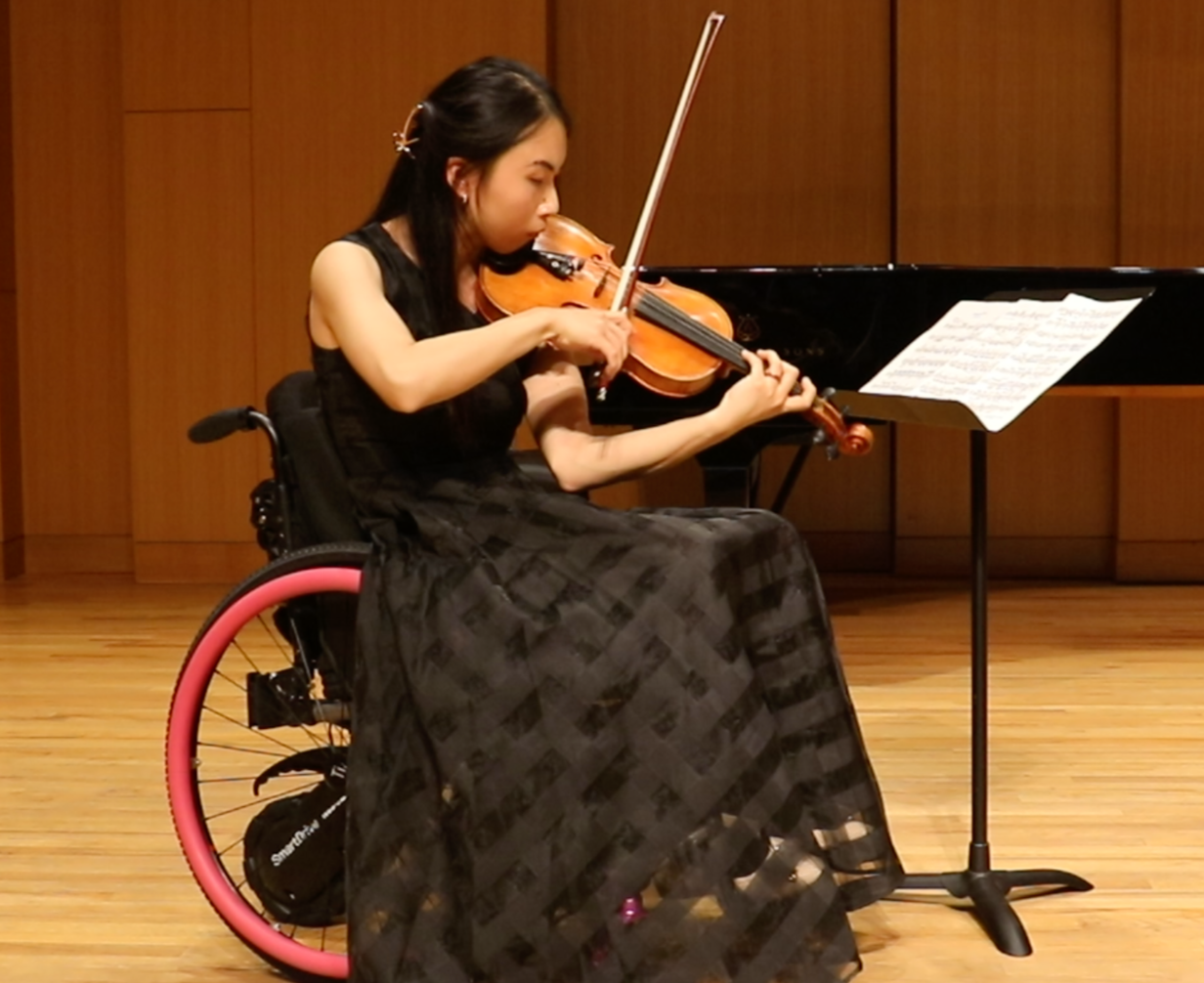
I am performing in a changed body—adapted, limited, but still true to the music. Still me.
Music was the center of my world until survival took over. I reached a point where breath and basic stability mattered more than my violin.
I’m Amy Wang-Hiller—a violinist, educator, and doctoral candidate at the University of North Texas. I founded InclusiVibe because patients shouldn't have to fight the medical record while they are fighting for their lives. When a patient's patterns are ignored or mislabeled, it isn't just a misunderstanding—it's a safety risk.
Too many of us spend years being dismissed or routed down the wrong path. When the chart stops matching your body, you end up doing what I did: building your own care team in real-time while your function is disappearing. I'm sharing my story to help bridge the gap between what is documented and what is actually lived.
This is lived experience, not medical advice.
What I have lived through
Over the past five years, I lived with the consequences of injuries that rarely appeared on the imaging. I went from walking to limping to losing almost all movement from the neck down. These weren’t slow changes; they were stepwise neurological deterioration. For only a few hours to a day after the triggers, I had to face a new, lower baseline and figure out how to live with the limitation and hope for no more.
My medical record often told a different story. Notes used phrases like “gradual progression.” Those words changed how urgency was treated. They also changed how my own account was heard.
I lived with multi-level instability and neurologic compromise. I lived with pain at the base of my skull. I lived with dizziness, swallowing problems, dystonia, and loss of bladder and bowel control. Weakness turned into sustained paralysis. Breathing became unsafe.
In March 2024, I underwent fusion surgery. It did not erase the damage already done. It did change the trajectory.
Months later, I began having episodes where I was fully aware but unable to move or respond. I could not speak. I could not swallow. I could not breathe on my own. I called these “locked-in-like” episodes because the internal reality was simple. I was present, and I could not reach the outside world.
I am still here. I still live with C1-level paralysis. I still believe in hope, not as a way to soften what happened, but as a decision to keep building with the truth in front of me. I want a safer path for the people who come next.
When everything changed (2020–2021)
When the COVID-19 lockdown hit, I was traveling for a competition near Houston. Music work moved online overnight. I threw myself into projects and dissertation planning.
I did not yet know I had Ehlers-Danlos Syndrome. I did know my joints were unstable. My shoulders and wrists were subluxating. I also had mild POTS, which I had learned to manage.
In late 2020, after a deprivation tank experience, my neck began to feel unstable in a way I had never felt before. My head felt heavy. Soon after, my autonomic symptoms escalated. My heart rate and blood pressure swung. I had near-fainting episodes and drop attacks. I later had episodes that looked like seizures after a fainting event that involved prolonged neck hyperextension. At times, I had temporary right-sided paralysis afterward.
I went looking for an explanation. Cervical instability related to connective tissue disorders was not part of the early differential where I lived. Because of a prior psychological misdiagnosis, the most convenient pathway opened first. When epilepsy was ruled out, I was routed toward a PNES framing.
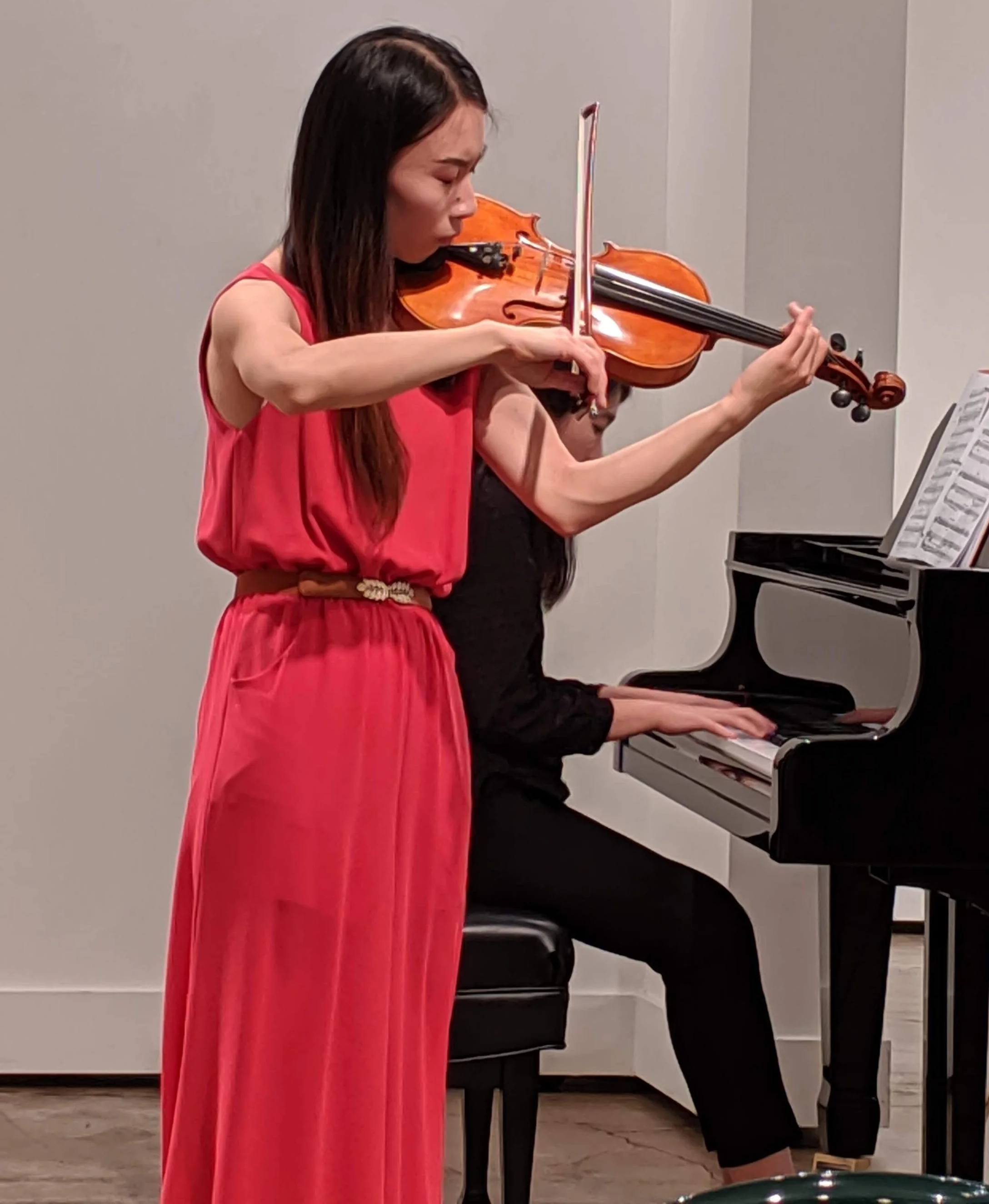
It’s hard to remember how effortless playing felt before paralysis.
Stability didn’t erase disability, but it has given me a new way of seeing the violin.
By mid-2021, the picture no longer matched that label. A clinician called my movements an “arrhythmic tremor.” With time, those episodes made more sense to me as neurologic injury and dystonic storms. I had done enough therapy and self-checking to know this was not my mind inventing symptoms.
I started mapping patterns. Some episodes were described as vague or inconsistent. They were not. They had triggers. They had a sequence. They had consequences. The problem was that the wrong label shaped the response.
In 2021, I paused my doctoral program. Appointments, referrals, medical record review, and trying to build a coherent plan became a full-time job. At the same time, I was losing function.
One point needs to be said plainly. My progression did not feel gradual. It came in steps. A sudden loss. A new baseline. Then another loss. But the record often used “gradual progression,” and that flattening changed what was treated as urgent.
Function loss: from walking to neck-down paralysis
Function loss: from walking to neck-down paralysis
In 2021, my function dropped in steps. A trigger would hit. My baseline would change. Within six months, I moved from a cane, to a rollator, to a wheelchair. I kept adapting so I could keep living. I traveled for performances. I showed up for life. I stayed present while my body changed faster than my care plan.
In June 2021, I had a major drop after a painful sacral MRI and the transfers and positioning around it. Imaging showed Tarlov cysts, and a nerve root block reduced some pain. The neurologic picture still worsened. Leg pain and spasms intensified. Weakness escalated. Motor loss spread until both legs were significantly impaired, up to the thigh.
Later in 2021, I had another sudden drop after exertion. My hips stopped cooperating. That was when I began tracking triggers and patterns in detail and reached out to specialists who evaluate tethered cord and related conditions. Later testing also identified spina bifida occulta, which added context to what was unfolding.
In December 2021, my neck’s final stabilization failed. The morning after an adaptive workout session, motor function from the chest down collapsed. My bladder and bowel function failed at the same time.
In 2022, the same stepwise pattern continued in my arms and hands. On paper, months passed between drops, so the story looked “gradual.” In my body, it did not feel gradual. I lost independence in chunks. My breathing worsened. Therapy measures and strength testing reflected the decline.
Objective data existed. A nerve conduction study showed abnormalities. Upright imaging raised concerns. A cranio-cervical junction study documented severe ligament injury. Even with that, clinicians without hEDS and upper cervical instability expertise did not consistently treat the constant pattern as urgent. A custom cervical collar entered the picture, but the path toward a coherent explanation and plan still stalled.
A note about being “upbeat” and delayed grief
Many people have asked how I can be so upbeat while paralyzed, as I share my journey. My response is that I learned to accept quickly when progression happened again—because these things gain momentum, and onset can be sudden before I’ve had time to adjust. So I think about what I can do next: accept, adapt, and keep living.
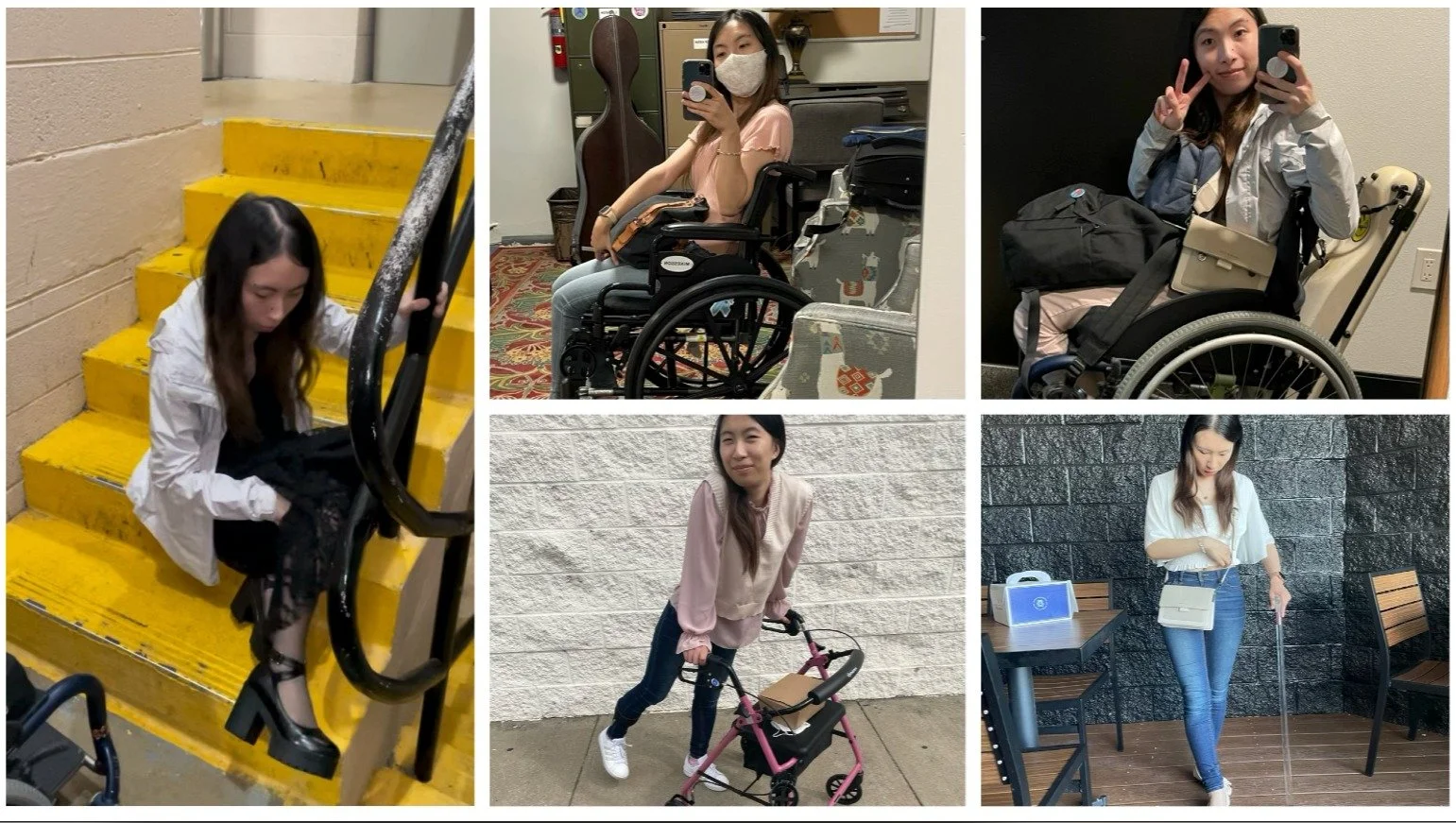
But let me be clear: this is not positivity as denial. Grief comes late for me. For a long time, the top priority was figuring out what was wrong with my body—identifying the source, obtaining the necessary imaging, and finding someone who could connect the dots. Survival work took up so much space that there was little room for grief. Now, as stability improves in small ways, I can finally feel it as I write this piece.
The missing piece: imaging plus expertise
Eventually, advanced imaging, including dynamic studies, confirmed what my body had been signaling for years: severe, multi-level cervical instability consistent with my symptoms and neurologic decline. What stayed with me was the delay. By the time I reached clinicians who routinely evaluate CCI and AAI in connective tissue disorders, the worst stepwise drops had already happened.
When I finally met neurosurgeons with deep experience in this area, the concern became concrete. They could name what they were seeing, explain why it mattered, and connect it to what I was living. My pattern no longer fit the categories I had been routed into, and the stakes were no longer theoretical.
One surgeon said something that matched the urgency I had been trying to communicate for years. If I had been a family member, they would not have waited.
My surgical plan: decompression and stabilization
By 2024, the risk was no longer abstract. With diagnosed CCI, my care required decompression, alignment, and stabilization to stop further neurologic decline and give me the best chance of protecting whatever function was still recoverable.
The plan had two goals. First, reduce compression and mechanical stress at the cranio-cervical junction. Second, stabilize alignment to prevent further stepwise drops and create the conditions for any possible recovery over time. Because my case was complex, the team advised me not to wait.
I tried to postpone anyway. I was balancing school, financial reality, and the stubborn hope that I could hold on a little longer without paying for it. Delaying felt like buying time. My body did not cooperate. The flares intensified. I lived with constant nausea, near-fainting, and instability that felt unsafe. At a certain point, the choice stopped being about timing and started being about survival and preventing further irreversible loss.
Donor support made surgery possible in March 2024, shortly after the Reeve Summit, which became my final performance before surgery. I will never be casual about the people who made that possible. Surgery did not erase the damage already done. It did not restore my body to who I was before. But it changed the trajectory. Operative findings and the post-op course clarified the severity of what had been missed or delayed for years, and they validated that I had not been imagining the stakes.
A year of recovery and horrors: neurologic events and “locked-in-like” episodes
From the start, I understood that surgery would not “fix” what had already been damaged. Recovery is not a simple before-and-after, and it is never linear.
Five months after fusion, something terrifying and unexpected happened. I began having episodes where I was fully aware but unable to move, speak, or respond. I called them “locked-in-like” episodes because the lived reality was simple. I was conscious, and I could not reach the outside world.
Over time, the pattern became hard to ignore. These episodes did not feel random. Cervical stress and positioning, especially involuntary hyperextension of my neck, could set off escalating dystonia. The dystonia could build into storms and then into a locked-in-like state. In the hospital, the same pattern was often retriggered by routine handling. I was repeatedly boosted up in bed in ways that forced my neck backward. Each time it happened, my body paid for it.
The first episode was the most terrifying because I did not understand what was happening. One moment, there was a shift in neck spasm and control. The next, it felt like my whole body dropped out from under me. I could not signal the outside world. I could not tell anyone I was still there. Hours passed while people assumed I was not responsive in the way they expected, not realizing I was awake and trapped inside my body.
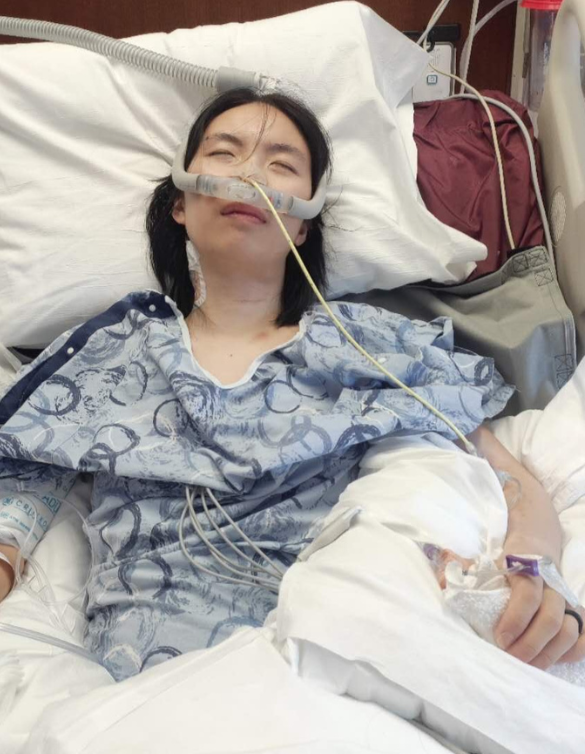
One detail matters for safety and for understanding. Pressure against the back of my head, the occipital region, could worsen or prolong the state. If my head stayed pressed into the pillow, I often could not get out of it. The episode would continue for hours. Repositioning to relieve that occipital pressure was one of the only immediate interventions that reliably helped. During those hours, I was conscious but unable to communicate. The longest episode lasted 23 hours.
What compounded the danger was not only the episodes themselves. It was the response around them. I reported the trigger pattern and asked for it to be documented because it changed how I needed to be positioned, monitored, and treated. Too often, those safety details were minimized or left out of the record. When patient-reported trigger patterns are treated as optional, the care plan cannot reflect them. That gap is where preventable harm happens.
As my condition worsened through severe complications, standard interventions carried extra risk for me. In moments of crisis, I was treated as if the issue were primarily psychological. My safety depended on the few people who chose to pause, reassess, and intervene based on what my body was doing, not what the chart assumed.
My family and I consider it a miracle that I am still living. We are grateful for the life I have now. We also know that returning to the hospital can mean another fight. For patients with complex disability, survival requires planning, documentation integrity, and advocacy strategies that should not be required for basic safety.
Why InclusiVibe exists
This year, I am spending Christmas with my in-laws. For most people, that is normal. For me, it marks a shift. Not because life became easy, but because stability made family time possible again.
I keep doing this work for one reason. Patients with complex disability need care built on accuracy, consistency, and basic respect. Too many people get routed by assumption. Too many lose time while symptoms get reframed into something easier to dismiss.
InclusiVibe exists because stories hold what the chart often misses. A story captures timing. Triggers. What helps. What makes things worse. When those details are recorded and carried forward, they protect patients. They also teach clinicians and allies what to look for when a case does not fit a fast template.
How Music Became Advocacy
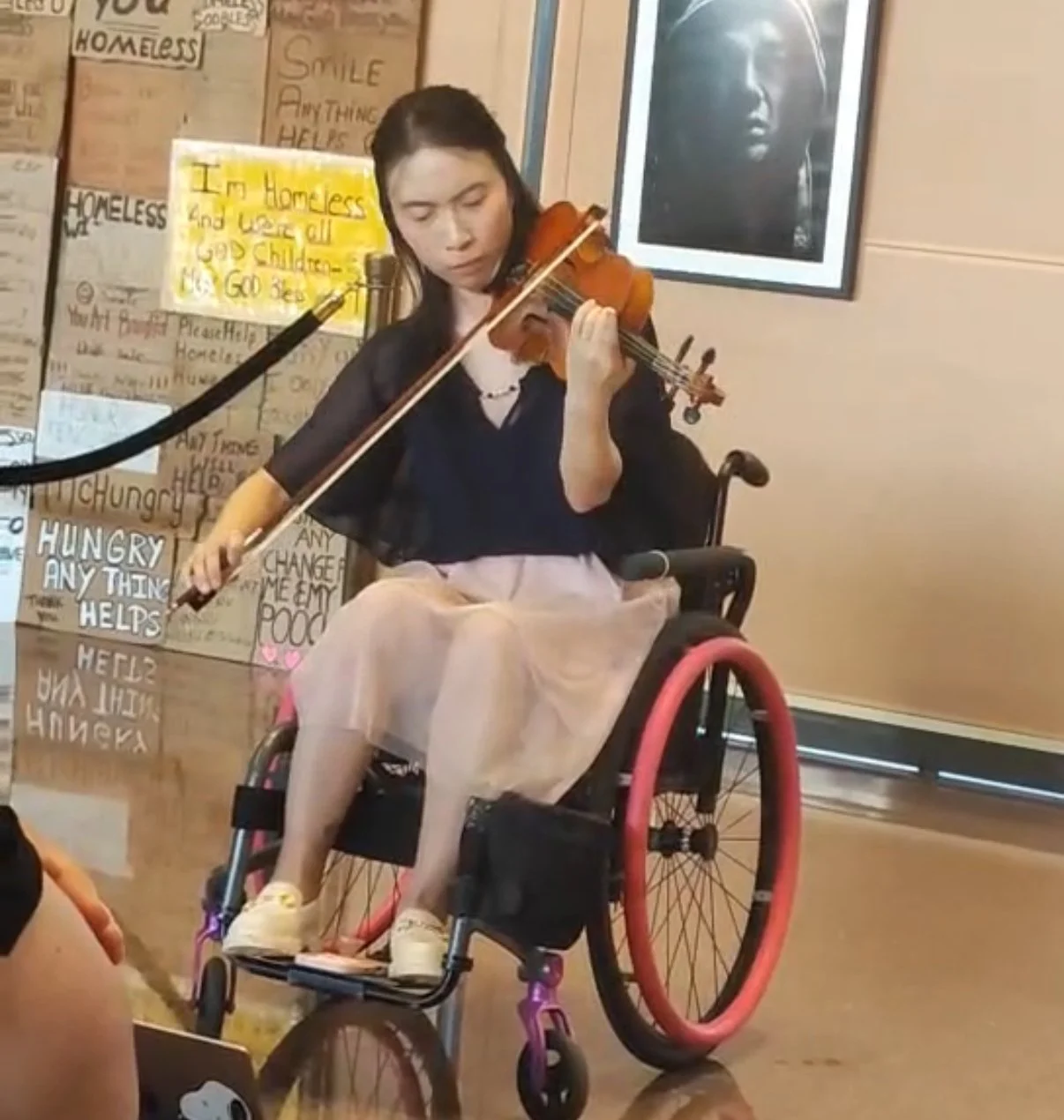
“I played like it was my last—because I didn’t know if the next trigger would leave me with even less movement.”
I played as much as I could—until the progression kept taking more.
As a violinist, I’ve learned that survival is both medical and creative. When function changes and words fail, music can carry what the body cannot. Over time, I realized my story wasn’t only about what happened to me—it was about what happens to patients when complex disability is minimized, misdocumented, or treated as ‘too hard’ to categorize.
That is why InclusiVibe Foundation created Voices & Narratives and ConcertStories: to translate lived experience into art and storytelling that people can actually understand—and to use that visibility to advocate for safer, more rigorous, trauma-aware care expectations.
If you’re living through something complex and invisible, I believe you. And if you’re a clinician, educator, or ally willing to learn, thank you—learning is often the difference between dismissal and safety.
Disclaimer: Personal experience narrative only; not medical advice.
Want to share your story? stories@inclusivibe.org
For the longer, detailed version of this narrative, I’m publishing a multi-part series on Substack.