Caitlin Clonan: Between Fine and Actually Struggling to Survive
My conditions:
Craniocervical/upper cervical instability (CCI/AAI) | Dysautonomia (POTS, etc.) | Stroke/brain injury | Chronic pain
What It's Actually Like Living with NeuroComplex Conditions:
Sometimes it just feels absurd. From the outside, I look like a normal young person — hiking gear, writing a book, selling art prints — basically the poster child for “functional adult.” Inside, though? My brain feels like it’s melting and oozing out of my ears. Creating and producing all these things isn’t just a hobby; it’s my coping mechanism. But because people see me doing all these things, they assume I can do all the things. Spoiler: I can’t. I’m about 90% bed-bound, can’t look at screens, and forcing myself to do anything literally results in excruciating pain, seizures, and general chaos. It’s a weird, absurd balancing act: “Look at me functioning!” versus “Help, my brain is leaking again.”
The Full Story – A Glimpse of My Holy Mess
My life is basically a Shakespearean tragicomedy — if the tragedy involves chronic illness and the comedy is my terrible impulse control. I’ve passed out in multiple countries because I thought studying abroad right after being diagnosed with a brain injury was a brilliant idea. I started an ice cream truck during a pandemic (because why not?), and I became a ski photographer — despite skiing being the thing that gave me my brain injury in the first place.
So, I went on what was supposed to be a vacation in Florida. Sounds relaxing, right? Except my body apparently didn’t get the memo. I stopped breathing, went into a coma, and had a dream where Jesus said, “Do not doubt me.” Not exactly the kind of thing you casually note in your medical chart.
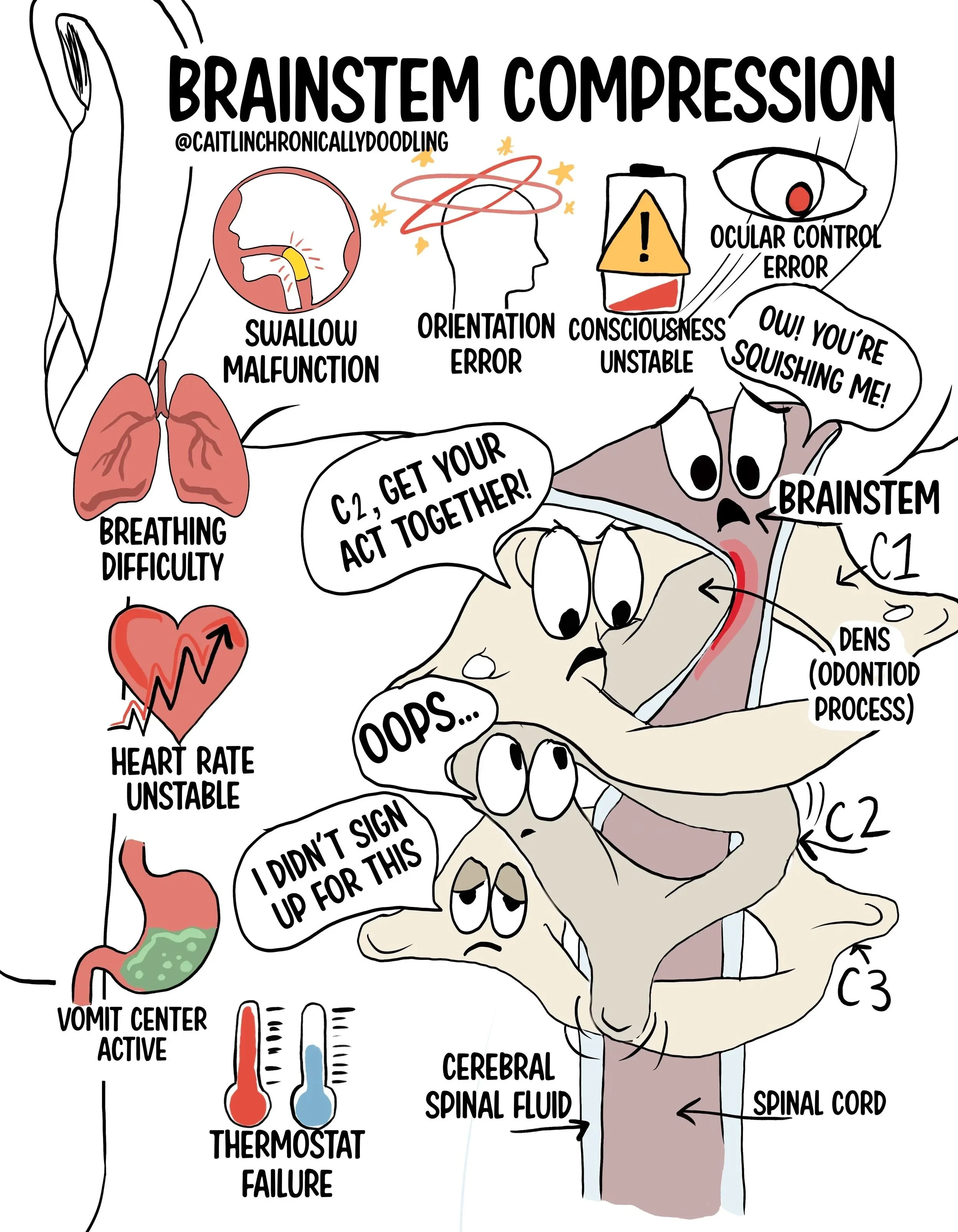
The doctors weren’t super helpful in figuring out what actually happened. Most likely, it was my brainstem compression—the part of your brain that controls breathing—plus the fun bonus of seizures. But in true medical comedy-of-errors style, they assumed a young person who stops breathing must have overdosed and actually put “medication overdose” in my chart. Zero proof. Classic.
Meanwhile, my symptoms have been steadily worsening over the last eight years. I started off semi-functional, now I’m mostly not, because for three of those years I spent convincing doctors that my problems had to be from my concussion, only to be met with skepticism and misdiagnosis. Somehow, I survived all of this and even wrote a book about it, which is probably the only sane thing I’ve done in the last decade.
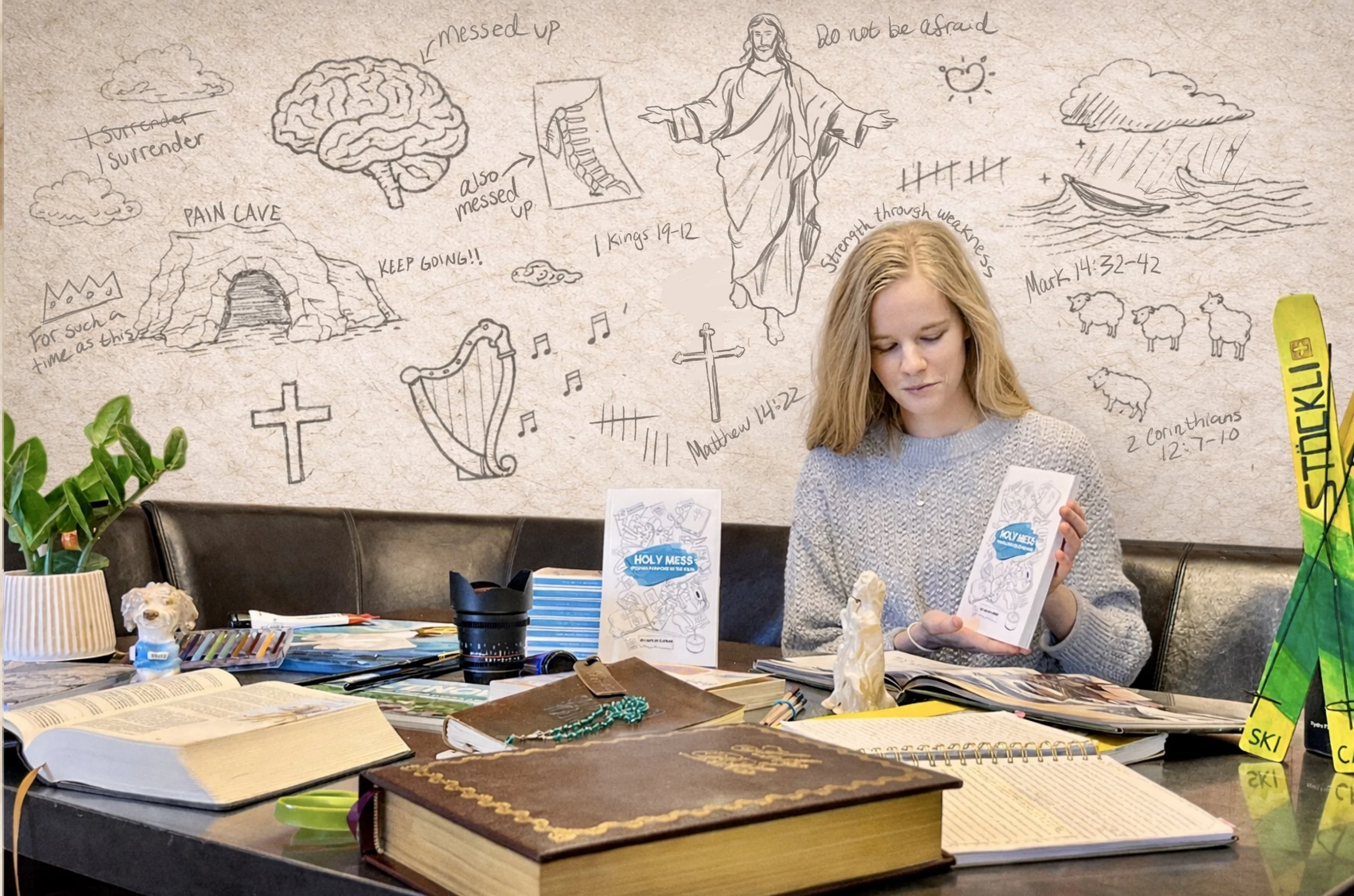
the struggle of living with invisible illness and the ways I’ve used art and humor to navigate it.
I explore this whole episode more in my book Holy Mess, which dives into the medical chaos, the absurdity, the humor, and how I managed to survive it all while keeping my faith intact. I wanted to make sure this piece of the story was included because it’s a pivotal moment, and it also gives a sense of how utterly ridiculous, intense, and unpredictable living with these conditions can be.
The biggest barrier to care, access, and support:
Being believed. For three years, I repeatedly told doctors, “This has to be from my concussion and whiplash injury,” and their response was basically a broken record of, “Not possible.” When my seizures started, one doctor diagnosed them as migraines. I’m still looking at the ceiling and thinking, “What on earth?”
I’m constantly reminded of that meme with the Muppet giving side-eye and the caption, “When you realize you’re the smartest person in the room… and you’re in the hospital.” That. Exactly that.
What helped me cope, adapt, or move forward:
Creating, even when it physically hurts, has been my lifeline. Writing, drawing, playing piano — even simple things feel impossible sometimes, but I do them anyway, because not doing them is worse.
For example, I wrote an entire book (Holy Mess: Finding Purpose in the Pain) without being able to physically read it. I had to use speech-to-text to write and then have my phone read it back to me with an AI voice. There’s something hilariously tragic about your own book narrating itself because your body refuses to cooperate. But somehow, it works, and it keeps me afloat.
I also make medical cartoon diagrams that break down complicated health conditions into easy-to-understand cartoons — they’ve helped other patients and even a few doctors, which is basically my ultimate mic-drop moment.
And, of course, my faith has been a lifeline. God saved my life — literally and figuratively. Navigating this chaos has strengthened my faith in ways I never expected, and even in the absurdity and pain, I’ve found a deep gratitude for that guidance, which, let’s be real, sometimes has to carry me through when my brain and body aren’t cooperating at all.
If I could change one thing in music, healthcare, or society for people like me:
I would change how seriously invisible illness is taken. People assume if they can’t see it, it must not be that bad — but the invisible part often comes with real danger, real pain, and the constant effort of proving that you exist in the space between “fine” and “actually struggling to survive.”
It’d be nice if society believed patients without requiring a full police investigation for validation.
To see more about my book, check out my website: holymesspurpose.com and my instagram: @caitlinchronicallydoodling